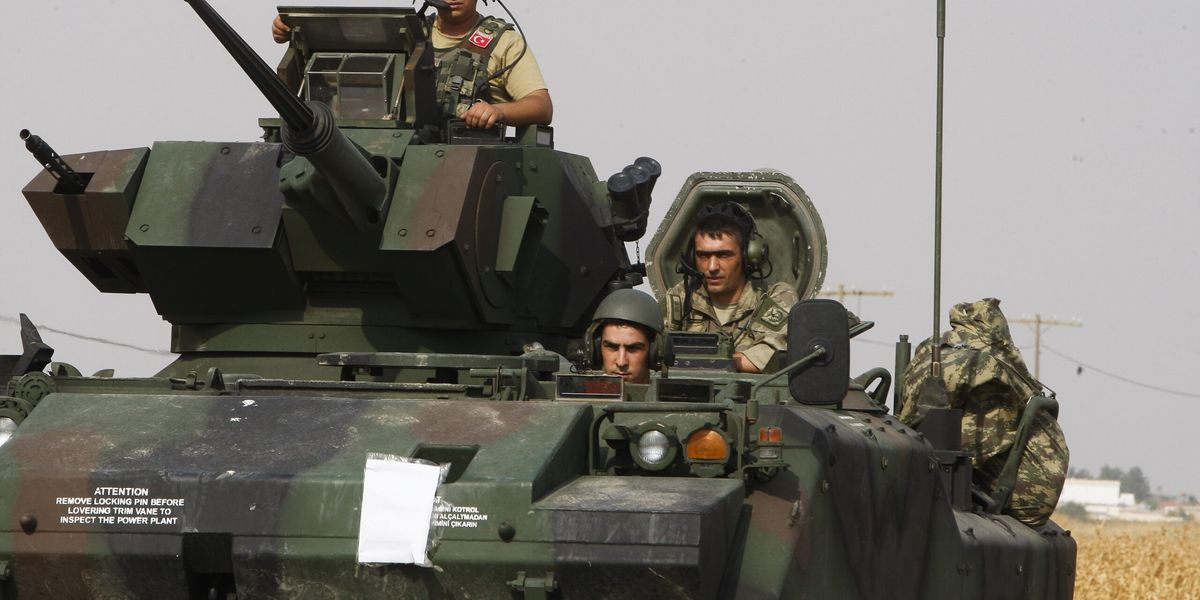
Averted Catastrophe: How a Massive YPG Missile Attack was Prevented in Turkey
In a significant victory for regional security, Turkey recently announced the successful prevention of a massive missile attack orchestrated by the People's Protection Units (YPG). This critical operation, spanning across northern Iraq, saw Turkish intelligence and military forces, in close coordination with local Peshmerga, uncover and seize a substantial cache of weaponry intended for civilian targets within Turkey. The swift action not only neutralized an imminent threat but also underscored the complex security challenges facing the region and the relentless efforts required to combat terrorism. The fact that a missile prevented Turkey from experiencing a devastating assault is a testament to sophisticated intelligence work and robust inter-agency cooperation.
The announcement came from Turkey's Foreign Minister Mevlut Cavusoglu, who revealed the plot during a press conference in Antalya. According to Cavusoglu, Turkish intelligence services received timely information detailing the YPG's malicious intent to target innocent civilians in Turkey. This intelligence proved instrumental, setting in motion a meticulously planned joint operation that ultimately safeguarded countless lives. The incident highlights Turkey's proactive stance against groups it considers terrorist organizations, particularly the YPG, which it links to the Kurdistan Workers' Party (PKK) – a group that has waged a decades-long insurgency against the Turkish state.
The Role of Turkish Intelligence: A Proactive Defense
The prevention of such a large-scale attack begins long before any boots are on the ground. It starts with the silent, often invisible, work of intelligence gathering. In this instance, Turkish intelligence services were the frontline, intercepting critical information about the YPG's sinister plans. This early detection is paramount in counter-terrorism, offering the crucial window needed to plan a defensive response rather than a reactive one.
Modern intelligence operations are a complex mosaic of human intelligence (HUMINT), signals intelligence (SIGINT), imagery intelligence (IMINT), and open-source intelligence (OSINT). For an operation of this magnitude, it's highly probable that multiple streams of information converged, painting a clear picture of the threat: the identity of the perpetrators, their intended targets, and crucially, the location of their armaments. This sophisticated intelligence fusion allowed authorities to pinpoint the warehouses in northern Iraq where the missiles and ammunition were stored, transforming an abstract threat into a tangible target for neutralization. The success here underscores the critical importance of robust intelligence infrastructure and highly trained personnel in preventing catastrophic events. For more insights into these crucial efforts, you can read about how Turkish Intelligence Thwarts YPG Missile Plot Targeting Civilian Areas.
Joint Force: The Anatomy of a Successful Cross-Border Operation
Once the intelligence was corroborated, the operational phase commenced, showcasing an impressive degree of coordination between diverse security forces. Minister Cavusoglu specifically noted that the successful prevention was a result of a joint operation involving Turkish intelligence, the Turkish military, and local Peshmerga forces in northern Iraq. This multi-agency, cross-border collaboration is a complex undertaking, requiring not only strategic alignment but also tactical synchronization and mutual trust between different units operating in a sensitive geopolitical landscape.
The involvement of Peshmerga forces, the military of the Kurdistan Region of Iraq, is particularly noteworthy. It signifies a shared understanding of the threat posed by the YPG and PKK to regional stability and an acknowledgment of the necessity for collaborative action. Operating in northern Iraq, a region with its own intricate security dynamics, necessitates careful diplomatic engagement alongside military strategy. The success of this joint venture demonstrates that despite political complexities, common security interests can drive effective partnerships against non-state actors like the YPG. The coordinated efforts ensured that the *missile prevented Turkey* operation was executed with precision and minimal collateral risk.
During the operation, the identified warehouses in northern Iraq yielded a "very serious amount of ammunition and missiles." While the exact specifications of the seized weaponry were not disclosed, the sheer volume and nature of the armaments seized suggest a significant capacity for destruction. These were not mere small arms but likely included sophisticated missile systems capable of striking civilian population centers over considerable distances. Neutralizing such a cache not only saved lives but also significantly degraded the YPG's offensive capabilities, forcing them to re-evaluate future hostile actions. This proactive disruption is far more effective than reacting to an attack after it has occurred, highlighting the critical value of striking at the source of the threat. Details on this collaborative effort are further explored in Joint Operation: Turkey, Peshmerga Block Major Missile Attack Plot.
Understanding the Threat: YPG, PKK, and Regional Stability
To fully grasp the significance of this prevention, it's essential to understand Turkey's perspective on the YPG. Turkey views the YPG as the Syrian offshoot of the PKK, which is designated as a terrorist organization by Turkey, the United States, and the European Union. The PKK has been engaged in an insurgency against the Turkish state since the 1980s, an conflict that has claimed tens of thousands of lives. For Ankara, the YPG's presence and activities, particularly in regions bordering Turkey, represent an existential security threat.
The YPG's stated objective in Syria is to establish an autonomous Kurdish region, which Turkey fears could embolden the PKK and destabilize its own southeastern provinces. The seizure of missiles clearly intended for civilian targets in Turkey corroborates Ankara's long-standing concerns about the YPG's hostile intentions and its capacity to project force across borders. This incident serves as a stark reminder that while international attention often focuses on other conflicts in the Middle East, the struggle against groups like the YPG/PKK continues to be a paramount security concern for nations in the region.
The ongoing conflict with the PKK and its affiliates like the YPG presents profound challenges for regional stability. Northern Iraq, in particular, has unfortunately become a complex arena where various actors operate, often leading to cross-border security concerns. For Turkey, securing its borders and preventing attacks emanating from these volatile zones is a core national security imperative. The collaboration with local Peshmerga forces in this operation underscores the shared interest in maintaining stability and preventing any single group from dominating or using the region as a launchpad for terrorism.
The Broader Implications for Regional Security
The successful prevention of this missile attack sends several important messages. Firstly, it demonstrates Turkey's unwavering resolve to protect its citizens from terrorist threats, regardless of their origin. It underscores a proactive and robust security doctrine that prioritizes intelligence-led operations and cross-border cooperation.
Secondly, it serves as a deterrent to other non-state actors contemplating similar attacks. The message is clear: Turkey possesses the intelligence and operational capabilities to detect and neutralize threats before they materialize. This preemptive approach is crucial in the volatile geopolitical landscape of the Middle East, where the proliferation of weaponry and the complex web of proxy conflicts can rapidly escalate tensions.
Finally, the cooperation with the Peshmerga forces highlights the potential for effective partnerships even amidst broader geopolitical complexities. While nations may have differing long-term goals, shared immediate security concerns, such as combating terrorism, can pave the way for successful collaborative efforts. This incident could serve as a model for future regional security initiatives, emphasizing the critical role of intelligence sharing, joint planning, and coordinated execution in tackling transnational threats.
Maintaining peace and security in such a dynamic region requires constant vigilance, adaptable strategies, and strong international partnerships. The episode where a missile prevented Turkey from experiencing a major tragedy is a powerful reminder of these necessities. It's a testament to the dedication of intelligence agencies and military forces working together to ensure public safety.
In conclusion, the prevention of the massive YPG missile attack by Turkey, facilitated by critical intelligence and a joint operation with local Peshmerga forces in northern Iraq, stands as a significant achievement in counter-terrorism. It averted a potentially catastrophic assault on civilian areas in Turkey, demonstrating the effectiveness of proactive security measures and multi-agency cooperation. This incident reinforces Turkey's commitment to safeguarding its borders and citizens while highlighting the persistent challenges posed by groups like the YPG/PKK to regional stability. The diligent work that ensured a missile prevented Turkey from facing widespread devastation underscores the continuous, behind-the-scenes battle against terrorism and the paramount importance of vigilance and international collaboration.